Airsoft Eye Protection: What Level Do You Actually Need?

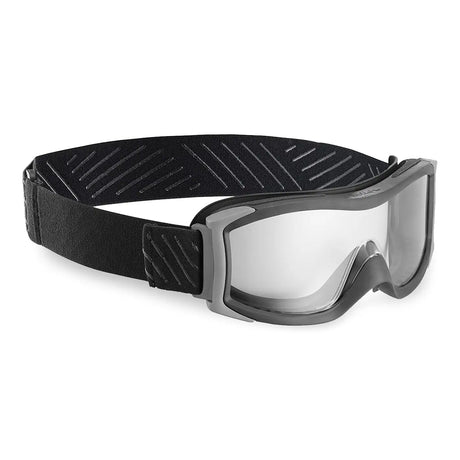
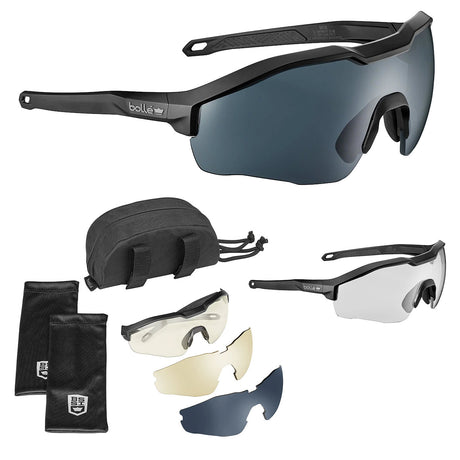
Bollé X1000 tactical ballistic goggles in black, EN166 B rated airsoft eye protection

Alex Silva |

Of all the kit you carry onto an airsoft site, nothing matters more than what is protecting your eyes. A skirmish-speed BB striking an unprotected eye can cause permanent damage in an instant, which is why every reputable UK site insists on proper eye protection and will not let you play without it. This guide explains what "proper" actually means, what the markings on your lenses are telling you, and which products meet the grade.

Why airsoft eye protection is non-negotiable

A typical airsoft replica fires a 6mm plastic BB at anywhere from around 280 to 350 feet per second. Even at the lower end, that is more than enough energy to rupture an eyeball or cause lasting injury. Unlike a graze to the arm or leg, an eye injury cannot simply be shaken off, and there are no second chances. This is why eye protection is the one area where you should never cut corners or rely on everyday sunglasses, cheap fashion goggles, or anything that is not certified to a recognised impact standard.

Understanding the EN166 standard

In the UK and Europe, impact-rated eye protection is certified to the EN166 standard. The important part for airsoft is the impact rating, which is shown as a single letter marked on the lens, the frame, or both. From lowest to highest, the levels are:

  • S - Increased robustness - the lowest impact level, tested with a falling steel ball. Not suitable for airsoft.
  • F - Low energy impact - withstands a 6mm steel ball at 45 metres per second. This is the minimum for some uses, but at close range it does not give an adequate margin of safety for airsoft.
  • B - Medium energy impact - withstands a 6mm steel ball at 120 metres per second. This is the level you want for airsoft.
  • A - High energy impact - the highest level, withstands a 6mm steel ball at 190 metres per second. More than airsoft requires, and typically found on military-grade eyewear.

To put that in context, an EN166 B rating means the lens has been tested against a steel ball travelling at 120 metres per second, which is comfortably beyond the energy an airsoft BB will ever deliver. That generous safety margin is exactly why EN166 B is the recognised benchmark for airsoft eye protection, and why we recommend it as the minimum, particularly for younger players.

ANSI and military ratings: equal or better

EN166 is the European standard, but it is not the only one you will see, and two others are just as good for airsoft - in fact they go beyond EN166 B:

  • ANSI Z87.1+ - the American high-impact standard. The "+" denotes the high-velocity impact rating, tested with a 6mm steel ball at speeds well above the EN166 B threshold. Eyewear marked Z87+ is an excellent choice for airsoft.
  • Military ballistic specifications - ratings such as MIL-PRF-32432A and MIL-PRF-31013 (the US military fragmentation standards, often referenced alongside NATO STANAG 2920) test against high-velocity fragments at energies far exceeding airsoft, and are the toughest protection you can buy. Eyewear meeting these specs comfortably exceeds what airsoft demands.

In short, EN166 B is the benchmark to look for, but if your eyewear carries an ANSI Z87.1+ or a military ballistic rating, you are equally well protected or better. Many quality tactical goggles and glasses, including the Bollé Safety range below, carry several of these certifications at once.

Goggles or glasses?

Both ballistic goggles and ballistic glasses can be used for airsoft, provided they carry the correct EN166 B rating (or an equivalent ANSI Z87.1+ or military ballistic rating). The choice comes down to the level of coverage and how you like to play.

Full-seal goggles are the safest option. Because they seal fully around the eye socket, there is no gap for a BB to find its way behind the lens, even from an awkward angle or a ricochet. They are the standard choice for most skirmishers and are usually mandatory for under-18s. The main trade-off is that sealed goggles can be more prone to fogging, which good anti-fog coatings and venting are designed to manage.

Ballistic glasses can also be used for airsoft and are popular for their low profile, light weight, and comfort, especially in hot weather or where full-seal goggles would clash with other gear. As long as they are rated to EN166 B or an equivalent standard, the lens itself offers the same impact protection. The thing to be aware of is coverage: because glasses do not seal against the face, there is a small possibility of a BB reaching the eye from the side or from an extreme angle. For that reason many players use a wraparound design, and some sites require full-seal goggles regardless. If in doubt, check your site's rules before you travel.

A quick word on mesh eye protection: mesh goggles do not fog and are light, but a close-range BB can occasionally shatter on the mesh and send fragments through. Many sites allow mesh only at the player's own risk, and it is generally not recommended for the eyes.

Bollé Safety: airsoft-approved eye protection

Bollé Safety has been making protective eyewear for over a century and equips military, police, and law enforcement users as well as airsoft players. Their tactical range is certified to EN166 B, and in many cases to demanding military ballistic standards such as STANAG 2920 / MIL-PRF-32432A, which makes it well suited to airsoft. Two full-seal goggles from the Bollé Safety range that we stock and recommend for airsoft are:

  • Bollé X1000 - a vented or sealed ballistic goggle with a clear lens, offering excellent coverage and airflow. A 3-lens kit and an RX prescription insert are also available, so you can adapt to changing light or play with corrected vision.
  • Bollé Chronosoft III BSSI - a sealed ballistic goggle offering reliable full-seal protection with the PLATINUM anti-fog coating. A matching RX prescription insert is available too.

Bollé Safety's lenses feature their PLATINUM anti-fog and anti-scratch coating, which helps keep your vision clear throughout a game - a genuine advantage with sealed goggles. If you wear prescription glasses, both models above accept an RX insert so you can play with full corrected vision behind certified protection.

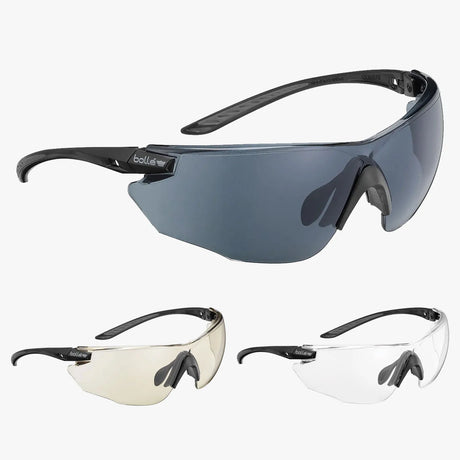
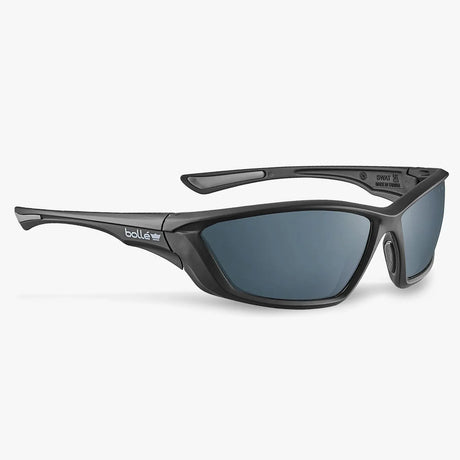
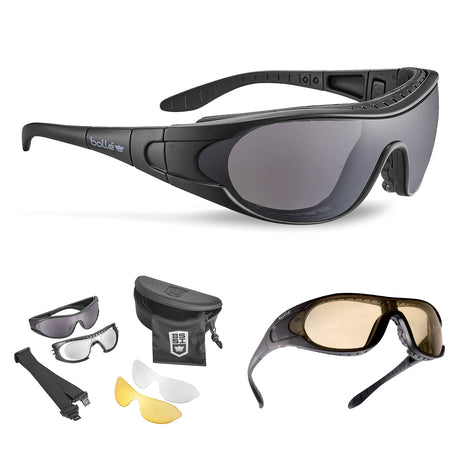
For players who prefer the lighter, lower-profile feel of glasses, Bollé Safety's tactical ballistic glasses carry the same EN166 standard and can be a comfortable option where a full seal is not required. Models such as the Bollé Silex+ BSSI and Bollé Tryon BSSI are good examples. As always, check that the specific model meets EN166 B (or an equivalent rating) and that your site permits glasses rather than goggles.

Looking after your eye protection

Certified eyewear only protects you if it is in good condition. A few habits worth keeping:

  • Replace after a significant impact - a lens that has taken a hard hit may be weakened even if it looks fine, so retire it.
  • Keep lenses clean and scratch-free - deep scratches affect both vision and integrity. Use a proper lens cloth, not your sleeve.
  • Use anti-fog properly - apply anti-fog treatments as directed, and choose vented or anti-fog-coated lenses if you tend to overheat.
  • Check the markings - make sure your eyewear actually carries the EN166 B marking (or an ANSI Z87.1+ or military ballistic rating) on the lens or frame before you rely on it.

The bottom line

For airsoft, look for eye protection rated to EN166 B, or an equivalent or higher standard such as ANSI Z87.1+ or a military ballistic specification - all of these meet or exceed what airsoft demands. Full-seal goggles give the most complete protection and are the safest all-round choice, while rated ballistic glasses are a comfortable, low-profile alternative where your site allows them. Whichever you choose, never play without certified protection, replace it after a heavy impact, and always check your site's specific rules before you go.

If you would like a hand choosing the right eye protection for the way you play, get in touch and we will be glad to help.